Frugaling

Save more, live well, give generously

  • Home
  • Start Here
  • Popular
    • Archives
  • Recommended
  • Contact
  • Save Money
    • Lifestyle Downgrade
    • Save Money with Mindfulness
    • Save at Starbucks
    • Psychological Trick To Reduce Your Online Shopping
    • Best Freebies
  • Minimalism
    • 8 TED Talks To Become A Minimalist
    • We Rent This Life
    • Everything Must Go
    • Lifestyle Downgrade
    • The Purchase Paradox: Wanting, Until You Own It
    • Nothing In My Pockets
  • Social Justice
    • Destroy The 40-Hour Workweek
    • Too Poor To Protest: Income Inequality
    • The New Rich: How $250k A Year Became Middle Class
    • Hunter Gatherers vs. 21st Century Desk-sitters
  • Make Money
    • Make $10k in 10 Months
    • Monetize Your Blog
    • Side Hustle for Serious Cash
  • Loans
    • 5 Rules To Follow Before Accepting Student Loans
    • Would You Marry Me?
    • Should I Have a Credit Card If I’m In Debt?
    • $50k in Scholarships in 70 Minutes

My High School Gambling Problem

By Frugaling 9 Comments

Share This:

Poker Table Chips Cards Gambling Problem
Photo: flickr/imagesofmoney

As a Millennial and part of the tech generation, I grew up around computers. I can’t remember much of a time before the Internet. Computers were ever-present by the time I reached middle school. When I was in fourth grade, I learned HTML and began writing code by hand – a geek of the highest order.

In elementary school, my parents bought their first computer. I was glued to the magic of the mouse, keyboard, and screen working together in a confluence of beautiful technology. These integrated zeros and ones seemed to dance before me, and it wasn’t long before I started making money from it all.

Today, I have a secret to share with you all: in high school, I had a gambling problem. In 2004, I started playing poker with my friends. It started out pretty casual and fun; lighthearted, even. Large groups of people would coalesce at one person’s house every couple weeks, and a doable $5 buy-in would be advertised. Texts and phone calls would be sent out, and the get-togethers were great.

Poker Cards Chips Texas Hold Em Gambling Problem
Photo: flickr/deutero

The buy-ins (the amount to play in tournament-style texas hold ’em poker) grew, too. What was $5 soon became $10, $20, and there were even re-buys (to buy back in for extra if you had lost once) at another $20. The shared prizes were amounting to hundreds and hundreds of dollars. If you won, you could easily walk away with an extra $100-200+ in your pockets. The infusion of funds was electrifying. I was hooked and loving it.

Some people were inspired by the statistical underpinnings. Behind it all, poker between friends was a stats-based game of skill and chance. But if you mastered the art of stats, your chances became stronger. Poker wasn’t pure gambling, as the same winners would be on the leaderboard week-to-week. They were doing something right.

The mathematics never appealed to me; instead, I loved the interpersonal dynamics – the play, candor, and fight between personalities at the table. Give me 8 other opponents, and I believed strongly that I could understand their style, bets, and choices. This was exciting and enticing. Unfortunately, at the end of every tournament, the game would be done for a couple weeks. I’d have to put my earnings and love for poker on hold.

I was looking to fill that gap, and that’s when I found online poker. The world of online poker is complicated to explain in the space and time I have today. Basically, the in-person life I was experiencing every couple weeks could happen every day – at any time. There were hundreds of thousands of players worldwide. Money was flowing – some would say overflowing. A growing mass of amateurs were joining, dropping $100, $200, $1,000 into online accounts. Frankly, they were suckers and I was ready to take advantage of their inexperience.

In 2005-2006, I was playing regularly online through two websites. I entered a couple tournaments and made nearly $2,000 in a couple weeks. When I played “cash games” (no buy-in and not in a tournament style), I was averaging anywhere from $7-10 per hour. Mind you, I was a sophomore/junior in high school, and this kind of money was astronomical to me.

Unfortunately, I had one major problem: I couldn’t stop. The money was so powerful and my earnings were ridiculously lucrative. I lost respect for money, and that’s where things got troublesome.

I was only 16 years old, had made thousands of dollars off of poker, and I was getting bored. Better said, I wanted to raise the stakes and make more money. $2,000 here and there was no longer enough – I wanted the $50,000 prizes and $50 an hour average pay. Amidst this mix of greed and boredom was a toxic combination. I started playing one-on-one (colloquially: “heads-up”) for hundreds of dollars at a time.

The numbers didn’t really mean anything, and it all began to feel pretty surreal. Once, I continually bet $100 against someone – over and over again – until I lost about $400. My heart was racing. I didn’t know whether to laugh or cry. Within seconds, I had lost hundreds, and all without care. I had been gambling for entertainment, and this was never the intention.

Off and on, I struggled to stop or curtail it – a telltale sign of addiction. The rush was calling and I itched to play more – in time and money. As my winnings disappeared, I saw my savings account go back down to near-zero. In addiction parlance, I had hit rock bottom, and began selling off dvds, books, and anything I could get my hands on to keep funding the rush. When I ran out of that, I used credit cards. When I ran out of that, I realized I had lost everything.

I’m about 5-6 years “sober” from poker/gambling problem. I haven’t touched a deck of cards to teach or play texas hold ’em. I blocked and closed all online accounts. Like all dependencies, I know this itch is eager to get back out there and play another hand. Instead, I’m writing this article and saving my precious pennies. Now, my life is changing and it has nothing to do with the cards I’ve been dealt.

Filed Under: Social Justice Tagged With: Cards, cash, Gambling, Games, Greed, money, Online, Poker, Texas Hold Em

Burnout: My Into The Wild Craving

By Frugaling 8 Comments

Share This:

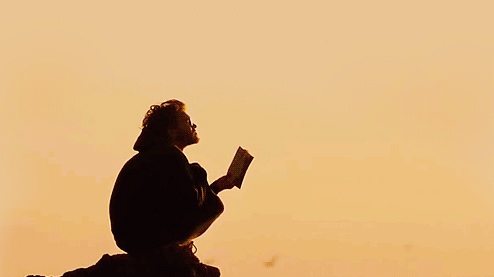
From Into The Wild Movie Burnout
Burnout makes me want to take off to Alaska, and have my own Into The Wild moment

Today’s diary-like article is brought to you by my head’s burgeoning desire to really see the world and diversify my experiences. As a student for about 21 years straight, I’m really starting to develop an itch for more. Stuck inside classrooms with esoteric professors (at times), and told to read ever-increasing amounts of onerous text, I’m burnt out.

My head keeps thinking about bigger questions:

  • Why are we here?
  • What motivates me?
  • How can I follow my dreams?
  • Why am I sitting in certain courses, losing an hour-and-a-half of life each class?
  • Am I benefiting from these more pedantic exercises in endurance for endurance sake?
  • How can I better help others?

Before I can focus on these questions, I’m swept away by the confining, time-limiting world of graduate school. I can’t tell you how many times I’ve heard this cliche: “Graduate school is like a marathon.” The purpose of this phrase is to both reassure and reevaluate your place. A marathon is all about pace; to finish 26.2 miles, you must have a perfect confluence of both time and energy. Just pace yourself in grad school, and you’ll make it through.

The analogy works, until I remember that I finished two marathons in the first two years of graduate school. See, I’d take a marathon any day over the drool-inducing caverns of classrooms. In these moments of both clarity and disillusion, I wonder what I’m doing and desperately want to buy a ticket to some far away place.

Dorothy from Wizard of Oz
Dorothy from the Wizard of Oz, clicking her red heels…

I want to see the world before it’s too late. I want to feel more before it’s too late. Life is finite, and precious. Being in a classroom, sitting through an incomprehensible lecture on a subject I will never apply to my work as a psychologist is hard to swallow. Like Dorothy, I’m clicking my shoes together, hoping to be anywhere but within these four academic walls. I want to be out there, helping people, and making a difference – concretely, directly.

That’s when my more frivolous self comes into the picture. That airfare to a remote destination is most certainly not frugal. The desire to experience, see, and do often comes with a price; frankly, Groupon doesn’t help. I’m in debt. Nothing is truly affordable; yet, I’m itching to get up and go.

Burnout is a warning. Burnout is when the presses stop, wheels cease to spin. Burnout can be disastrous to a frugal budget. That’s the last thing I need. Nowadays, my solution to these moments is to accept my body’s non-acceptance. My head and heart are telling me: something’s gotta give.

If you’re beginning to feel burnout, your body is communicating something about stress and flow in life. Likely, your time and energy is primarily going to tasks that aren’t fulfilling. The answer is simple: keep doing the same thing or change it up. Usually, it’s not about needing more time; rather, a reallocation of time. If you’re burnt out it’s probably time to starting saying “no” to certain projects, taking more time to pursue passion projects, and giving up a little bit of the expected path. It helps to remember that this is your path – no one else’s. You can change course whenever you feel like it.

Filed Under: Social Justice Tagged With: Budget, Burnout, Burnt out, Groupon, Into The Wild, Life, Marathon, money, Travel

The Purchase Paradox: Wanting, Until You Own It

By Frugaling 6 Comments

Share This:

Audi Luxury Car Vehicle Purchase Paradox
This is the purchase paradox and a nice, new Audi. Photo: NRMA/flickr

Despite aspiring to a new, more frugal life since May, I was looking at used car prices for newer models. Nothing is wrong with my older Honda Civic, but something was stirring inside me; at times, an inescapable and indescribable animalistic desire for more (even if I cannot afford it).

Something shook me from my ogling – a realization. We want what we cannot have. When we have what we desired, we no longer crave it. This phenomenon is the purchase paradox.

Purchase Paradox Oscar Wilde QuoteIt’s in the perpetual want and desire that we maintain our spending – a hamster wheel that is hard to depart. I could simply blame advertisers for causing and creating this false demand. I could point out how our capitalistic system encourages it. But there’s a fundamental human need to perpetuate this paradox.

Seemingly, it is nature to crave what we cannot have and lose attraction to that which becomes ours. We buy a fashionable coat, thinking it’s needed, craved, and desired. Purchased, owned, held, and it’s merely another accoutrement filling your burgeoning closet with stuff. The superfluous is only found after it’s written, purchased, and owned.

We adjust to a lifestyle. Buy the luxuries, feel the thrills, but eventually it fades. Objects cannot be more than fascination for long. They melt and meld into our identities and lives – defining a new normal and looking for the next fix. Bigger, better, fuller, fancier – the search continues.

Flirting with temptation and desire can motivate poor decisions and spending, but it fuels us – fundamentally. I cannot escape my desires every time, but I learn from each. We are walking paradoxes, spending like there’s no tomorrow, while recognizing that our days are numbered.

Filed Under: Social Justice Tagged With: audi, buying, Clothing, desire, fashion, Lifestyle, mindful, need, oscar wilde, paradox, purchase, spending

Food Stamps Are A Symptom: The Fall Of Wages Amidst Executive Excess

By Frugaling 7 Comments

Share This:

Snap Food Stamps Photo
SNAP! Photo: Sarah G/Flickr

In 2007-2008, the US economy collapsed into a powerful, potent recession that lasted years. Rates of unemployment and food stamp use escalated during this period. Everybody suffered throughout this turmoil.

Last year, The Washington Post asserted that food stamps increased because of the great recession – noting that 47 million people were now receiving the benefit. Amidst this trouble, Republicans in Congress worked to save about $40 billion over 10 years, by removing about 3.8 million from food stamps. But this highly-contested course of action never came to fruition.

What’s SNAP and who benefits?

The timing was confusing, though. At a time where more Americans than ever were in need of the welfare benefit, Republicans aimed to reduce benefits and exclude vast swaths of people. A variety of families and individuals need food stamps. From single-parent households with young children to underpaid full-time, single employees, food stamps positively affect and bolster the budgets of those most in need.

To qualify for SNAP (Supplemental Nutritional Assistance Program) as an individual, you need to make $958 (net income) or less every month. That’s about $12,000 a year; otherwise known as, poverty for an individual. Without some sort of assistance, it’s reasonable to assume that paying for nutritional, healthy food options may be severely restricted or non-existent. That’s what makes food stamps an important necessity for those in need.

USDA Gov SNAP Eligibility
Income Eligibility For SNAP. Chart: USDA.gov

The demographics are growing, changing

USDA Gov Photo Food Stamps WIC
Photo: USDAGov/Flickr

The Guardian Liberty Voice recently highlighted the shift in food stamp (SNAP) recipients. Unlike most assumptions regarding food stamps that are propagated in our media and culture, recipients are now working harder than ever – despite needing more benefits. A sharp change occurred over the last few years:

Food stamp use is now highest among working Americans, according to government statistics. This is the first time this specific group has had majority use of food stamps in U.S. history.

As the article continues, most years the elderly and young benefited most from SNAP. Now, working Americans are the largest recipients of this benefit. The Guardian Liberty Voice calls into question growing corporate profits amidst this turmoil and economic distress for the working class.

What is especially troubling about more people being on food stamps is that corporate profits have been high yet wages continue to decline.

The $80 million government program accounts for about $1.50 per meal per recipient. That can be difficult to live on, but food stamps aim to prop up low-income households to enable them to recover and grow out of this impoverished level. Unfortunately, these populations and families have been the target of a variety of public spending and private-industry employee cuts.

Simultaneously, executives are killing companies and employee spirit

It’s reasonable to assume that corporate executives are paid more than traditional employees. Their responsibilities are far grander and they are held responsible in a number of legal and shareholder situations. Most are paid for performance and work in very competitive environments. This can breed a culture of corporate profits over people.

Income among working class and executive class swiftly changed in recent years. AFL-CIO has calculated the average executive versus worker salaries.

The CEOs of S&P 500 Index company made, on average, 354 times the average wages of rank-and-file U.S. workers in 2012.

Despite trying economic times and difficult rates of unemployment, many companies are seeing their greatest profits ever and CEOs are receiving staggering salaries (by number and ratio). Lawrence Ellison, CEO of Oracle, was paid nearly $100 million for a year’s salary. Moonves, CEO of CBS Corp., received about $62 million. Starbucks‘ chairman and CEO, Howard Schultz raked in almost $29 million. To make the top 100 CEO salary pay list, you need to make at least $18.75 million per year.

CEO-to-worker pay ratios make it clear: Executive salaries ballooned in recent years and are directly correlated with a sharp decline in employment. Wall Street tends to value this attitude towards employees; rid the excess and reward the leader, the lesser man is expendable. But unfortunately, this mentality is degrading worker rights, confidence, and consistency.

What comes around goes around

The current, frigid economic conditions have left many without an out. Executive pay, staggering unemployment, and poor business practices created a cyclical problem for the majority of working Americans. Now, they are the largest recipients of food stamps. The tragic irony is that worker pay stagnated and unemployment rates increased, while executives received bountiful bonuses.

There are few defending the most vulnerable among us. The current equation seems broken. Maybe it’s time for protections, regulations, and a general counterbalance to protect hard-working Americans looking to achieve and work for themselves? Maybe we can start with executive income ratios.

Filed Under: Social Justice Tagged With: AFL-CIO, assistance, CEO, Congress, executives, food stamps, Income, Income Inequality, income ratios, nutrition, poverty, republicans, SNAP, Wall Street, welfare, wic

  • « Previous Page
  • 1
  • …
  • 13
  • 14
  • 15
  • 16
  • 17
  • …
  • 20
  • Next Page »

Follow

  • Facebook
  • Google+
  • Pinterest
  • RSS
  • Twitter

Subscribe

Best Of

  • Living For The Moment – Not Spending It
    Living For The Moment – Not Spending It
  • 5 Tricks To Save Money At Starbucks (Updated)
    5 Tricks To Save Money At Starbucks (Updated)
  • How can I get a loan to start my own business?
    How can I get a loan to start my own business?
  • What I Learn Outside The Classroom
    What I Learn Outside The Classroom
  • Stop Sharing REI's #OptOutside Campaign
    Stop Sharing REI's #OptOutside Campaign
  • 3 Vital Decisions for Financial Fitness
    3 Vital Decisions for Financial Fitness

Recent Posts

  • Débuter en photographie sans se ruiner
  • How to Eat Healthy on a Budget
  • How To Live Stream Your Art
  • 5 Fun Summer Activities on a Budget
  • How to Pay Off Medical Debt

Search

Archives

  • August 2025 (1)
  • June 2023 (1)
  • May 2023 (2)
  • January 2023 (1)
  • March 2022 (3)
  • February 2022 (2)
  • November 2021 (1)
  • October 2021 (2)
  • August 2021 (4)
  • July 2021 (5)
  • June 2021 (3)
  • May 2021 (2)
  • January 2021 (2)
  • December 2020 (2)
  • October 2020 (2)
  • September 2020 (1)
  • August 2020 (3)
  • June 2020 (1)
  • May 2020 (2)
  • April 2020 (1)
  • February 2020 (2)
  • January 2020 (1)
  • December 2019 (1)
  • November 2019 (5)
  • September 2019 (4)
  • August 2019 (1)
  • June 2019 (1)
  • May 2019 (1)
  • April 2019 (1)
  • March 2019 (3)
  • February 2019 (1)
  • January 2019 (3)
  • December 2018 (1)
  • September 2018 (2)
  • July 2018 (1)
  • June 2018 (2)
  • May 2018 (1)
  • April 2018 (5)
  • March 2018 (6)
  • February 2018 (4)
  • January 2018 (1)
  • December 2017 (10)
  • November 2017 (3)
  • July 2017 (2)
  • June 2017 (5)
  • May 2017 (2)
  • April 2017 (8)
  • March 2017 (4)
  • February 2017 (3)
  • January 2017 (2)
  • December 2016 (2)
  • November 2016 (4)
  • October 2016 (2)
  • September 2016 (1)
  • August 2016 (4)
  • July 2016 (1)
  • June 2016 (3)
  • May 2016 (3)
  • April 2016 (4)
  • March 2016 (5)
  • February 2016 (2)
  • January 2016 (2)
  • December 2015 (3)
  • November 2015 (5)
  • October 2015 (5)
  • September 2015 (4)
  • August 2015 (6)
  • July 2015 (8)
  • June 2015 (6)
  • May 2015 (14)
  • April 2015 (14)
  • March 2015 (13)
  • February 2015 (12)
  • January 2015 (15)
  • December 2014 (10)
  • November 2014 (5)
  • October 2014 (6)
  • September 2014 (7)
  • August 2014 (12)
  • July 2014 (11)
  • June 2014 (12)
  • May 2014 (16)
  • April 2014 (13)
  • March 2014 (13)
  • February 2014 (9)
  • January 2014 (20)
  • December 2013 (9)
  • November 2013 (18)
  • October 2013 (15)
  • September 2013 (11)
  • August 2013 (11)
  • July 2013 (27)
  • June 2013 (18)
  • May 2013 (16)

Best Of

  • Living For The Moment – Not Spending It
  • 5 Tricks To Save Money At Starbucks (Updated)
  • How can I get a loan to start my own business?

Recent Posts

  • Débuter en photographie sans se ruiner
  • How to Eat Healthy on a Budget
  • How To Live Stream Your Art

Follow

  • Facebook
  • Google+
  • RSS
  • Twitter

Copyright © 2026 · Modern Studio Pro Theme on Genesis Framework · WordPress · Log in